Monday - Friday 07:30 - 17:30, Saturday 07:30 - 16:00
Fitting Engineered Wood Flooring in London, E7
Back to Portfolio
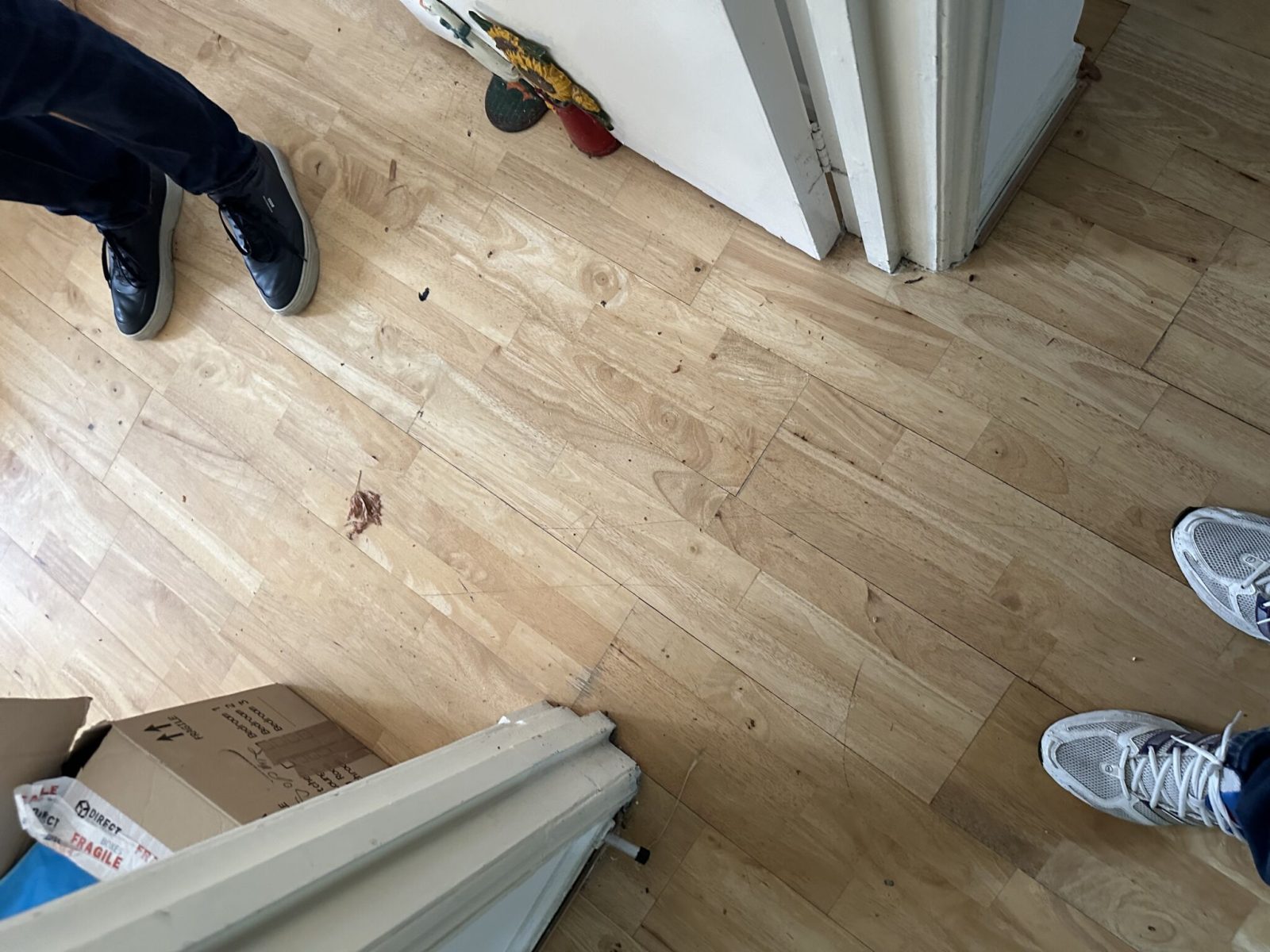


Fitting Engineered Wood Flooring in London, E7
We recently completed the fitting of engineered wood flooring across a Victorian property in London, E7. The client wanted a warm, durable floor that would suit the period character of the home while handling the demands of family life. Our team prepared the subfloor, removed the old covering, and installed the new engineered boards throughout the main living areas.
Work carried out
- Removal of existing floor coverings
- Subfloor assessment and preparation
- Moisture testing and damp-proof membrane installation where required
- Floating installation of engineered wood boards
- Fitting of scotia beading and threshold trims
- Final inspection and client handover
About the project
The property was a three-storey Victorian semi-detached house with original solid floors throughout. The client had chosen a medium-toned engineered oak with a brushed finish, roughly 14mm thick with a 3mm veneer. We fitted it across the ground floor reception rooms, totalling around 65 square metres. The main challenge here was addressing moisture levels in the solid concrete subfloor, which is common in older properties in this area. We installed a moisture barrier before laying the boards to prevent any movement or cupping further down the line.
The approach we took involved careful preparation from the outset. We checked the subfloor level using a spirit level and straightedge, identifying several areas that needed remedial work. We applied a self-levelling compound to low spots and allowed proper drying time before proceeding. The engineered boards were acclimated on site for three days before installation, allowing them to adjust to the ambient humidity. We used a floating method with an underlay, which proved ideal for this older property as it required no adhesives and allowed the floor to move naturally with seasonal changes in moisture content.
About our London, E7 service
London, E7 covers areas like Forest Gate, Walthamstow, and Leyton, where we work regularly on properties ranging from Victorian and Edwardian terraces through to 1930s semis and modern apartment conversions. Many of the older properties here have solid concrete or timber subfloors that need careful assessment before fitting new flooring. We understand the particular characteristics of each property type and adjust our preparation methods accordingly. Victorian and Edwardian properties often present moisture challenges due to their age and construction methods, whereas newer builds typically have screeded concrete that is more stable but requires proper moisture testing regardless.
The variety of property types in this part of London means we encounter most floor conditions and subfloor types. We regularly fit engineered wood in period homes where it offers the aesthetic of solid wood with greater stability, laminate in rental properties and high-traffic areas, and vinyl planks in kitchens and bathrooms. Our experience with the local building stock means we can anticipate potential issues and address them before they become problems. We've learned what works in this area and what doesn't, which allows us to provide realistic advice to clients about suitability, durability, and long-term performance of different materials.
Frequently asked questions
How much does engineered wood flooring fitting cost in London, E7?
Fitting costs typically fall between £35 and £60 per square metre, depending on the complexity of the subfloor, the layout of the property, and the fitting method chosen. Properties requiring extensive subfloor preparation or remedial work will fall toward the higher end. A straightforward floating installation on a well-prepared subfloor costs less than one requiring adhesive application or significant levelling work.
How long does it take to fit engineered wood across a room?
A room of around 20 to 25 square metres typically takes one to two days to fit, depending on the layout, whether the subfloor needs remedial work, and how many doorways or obstacles are present. This doesn't include subfloor preparation time, which can add several days if moisture barriers or levelling compounds are needed. We always provide a realistic timeline before starting work.
What preparation is required before we fit the flooring?
The subfloor must be clean, dry, level, and stable. We test moisture levels to ensure they're within safe limits for engineered wood, typically below 14 percent. Any existing floor coverings must be removed, and the surface swept clean. If subfloor damage or unevenness is present, we'll advise on remedial work needed before proceeding with the fit.
Project Gallery